

FOR IMMEDIATE RELEASE
[City, State] – [Date] – In a significant development for the burgeoning world of 3D printing, a new open-source project named Bambuddy has emerged, offering Bambu Lab printer owners a robust, self-hosted alternative to the manufacturer’s cloud-dependent services. This initiative directly addresses a growing chorus of user concerns regarding data privacy, software control, and reliance on proprietary infrastructure, potentially reshaping the landscape of consumer 3D printing management.
Bambuddy, accessible via its GitHub repository, positions itself as a "cloud-free central command" for Bambu Lab printers. It enables users to slice, print, and monitor their machines with complete local control, severing the umbilical cord to Bambu Lab’s official servers. This move is seen by many within the maker community as a vital step towards greater autonomy and data sovereignty, reflecting a broader pushback against the increasing "Internet of Things" (IoT) model where hardware functionality is tethered to remote cloud services.
Main Facts: A Paradigm Shift in Printer Management
At its core, Bambuddy is a testament to the open-source ethos: empowering users with control over their hardware. For owners of Bambu Lab’s highly popular 3D printers, it offers a compelling alternative to the default cloud-centric workflow. Instead of routing every print job, telemetry, and control command through Bambu Lab’s remote servers, Bambuddy allows all operations to remain within the user’s local network.
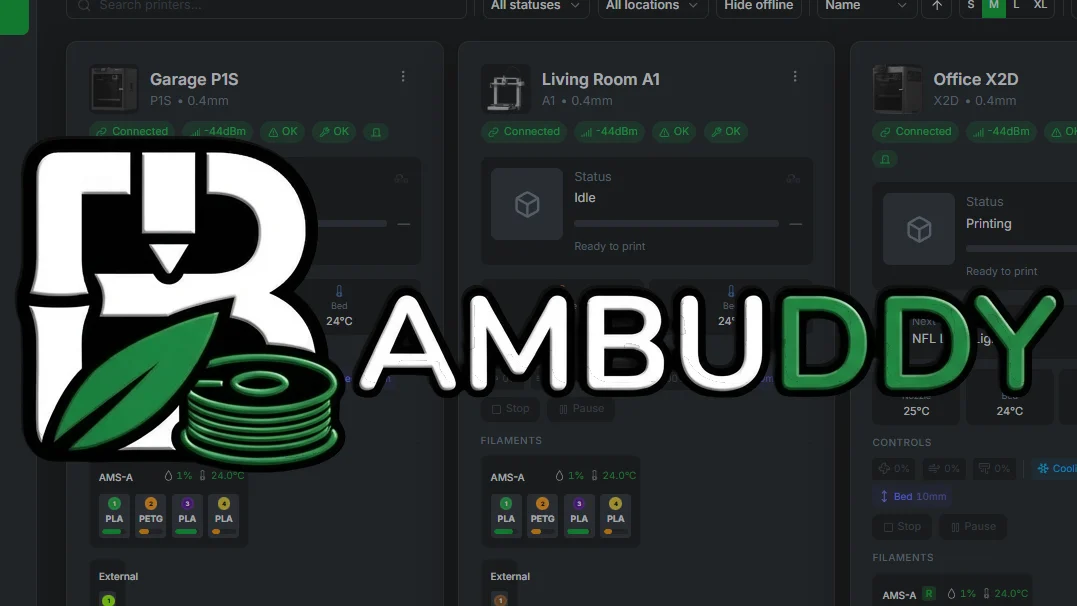
The software functions as a comprehensive control panel and management hub, capable of overseeing anywhere from a single printer to a small farm of up to forty machines. Its key features include an integrated slicer, a proxy mode for secure remote access (mimicking cloud functionality without external server reliance), and cross-platform compatibility, running seamlessly on Linux, macOS, and Windows. A popular deployment target for Bambuddy is the ubiquitous Raspberry Pi, underscoring its commitment to accessible, low-power, and locally managed solutions.
Installation involves a straightforward, albeit specific, process: users first set their Bambu Lab printer(s) to LAN-only mode, which intentionally disables cloud functionality and remote access. Subsequently, Developer Mode is enabled, granting external software, like Bambuddy, the necessary machine API access to control printer functions. Once these steps are completed, printers can be seamlessly integrated into Bambuddy, putting robust management capabilities directly into the hands of the user.
This shift from cloud reliance to local control is not merely a technical preference; it’s a philosophical statement. It addresses deep-seated concerns about data ownership, potential service outages impacting hardware functionality, and the long-term viability of products tied to third-party server infrastructure.
Chronology: The Genesis of Discontent and the Rise of Alternatives
The rapid ascent of Bambu Lab in the 3D printing industry has been nothing short of meteoric. Since its inception, the company has garnered widespread acclaim for its innovative, high-quality printers, particularly the X1 and P1 series, which introduced unprecedented speed, multi-color printing capabilities, and user-friendly automation to a broader audience. Their printers quickly became a benchmark for performance and reliability, attracting both hobbyists and professionals.
However, alongside this success, a significant aspect of Bambu Lab’s ecosystem began to draw scrutiny: its deeply integrated cloud services. From the outset, the official Bambu Studio software and mobile application were designed to leverage cloud connectivity for remote monitoring, print job submission, and firmware updates. While undeniably convenient for many, this architecture progressively raised questions among a segment of the user base.
Early Murmurs and Software Architecture Frustrations
Initial concerns revolved around the sheer volume of data being transmitted to Bambu Lab’s servers with each print job. Users questioned the necessity of this constant communication for what are essentially local operations. Beyond privacy, the reliance on external servers introduced a potential single point of failure. A notable incident in January 2023, where a cloud outage caused numerous printers to spontaneously restart or halt, underscored the vulnerability of a cloud-dependent system, leaving users with expensive hardware effectively bricked during the downtime.
Further frustration stemmed from Bambu Lab’s software architecture, which often seemed to actively discourage or complicate home-grown modifications and alternative control solutions. The proprietary nature of their cloud API and the limited documentation for local control options created barriers for tinkerers and developers accustomed to the open, hackable nature of many other 3D printer platforms. This friction intensified as the community sought greater flexibility and customization beyond the official offerings.
The Beta Authentication Scheme and AGPLv3 Allegations
The tension escalated with announcements of a "new beta authentication scheme," which further cemented the company’s control over printer access and data flow. Critics argued this move could further restrict local control and entrench cloud dependency, making it harder for users to operate their printers independently.
Perhaps the most significant catalyst for the development of alternatives like Bambuddy came in the form of allegations of AGPLv3 violations. The Software Freedom Conservancy (SFC), a non-profit organization dedicated to promoting and defending free and open-source software, publicly accused Bambu Lab of violating the GNU Affero General Public License Version 3 (AGPLv3) through their Bambu Studio software.
AGPLv3 is a strong copyleft license designed to ensure that users of software running on servers (often called "network services") receive access to the source code of that software. If a program licensed under AGPLv3 is modified and run as a network service, the modified source code must be made available to users interacting with that service. The SFC alleged that Bambu Studio, which is based on PrusaSlicer (itself derived from Slic3r), incorporated AGPLv3-licensed code without fully complying with the license’s terms, particularly regarding the sharing of modified source code. This is a critical legal and ethical issue in the open-source community, as non-compliance undermines the very principles of software freedom and fair use upon which much of the modern tech world is built. Such allegations painted Bambu Lab as a company benefiting from open-source contributions while potentially failing to give back as required by the license.
Compounding these technical and licensing concerns were reports of what some described as "heavy-handed legal behavior" from Bambu Lab when dealing with community projects or individuals attempting to reverse-engineer or offer alternative solutions. While specifics are often anecdotal, a general perception emerged that the company was less than welcoming to independent development efforts that diverged from its official ecosystem.
It was this confluence of privacy anxieties, architectural limitations, legal challenges, and community friction that created fertile ground for projects like Bambuddy. The desire for a truly open, locally controlled, and user-centric solution became palpable, leading to the creation of an alternative designed to put the power back into the hands of the printer owner.
Supporting Data: Unpacking Bambuddy’s Technical Prowess and User Advantages
Bambuddy is not merely a stripped-down alternative; it is a feature-rich platform designed to offer comprehensive control, often surpassing the capabilities of the official cloud services in terms of user autonomy and customization. Its design philosophy prioritizes local processing, security, and scalability.
Comprehensive Feature Set
-
Integrated Slicer: One of Bambuddy’s most compelling features is its integrated slicer. This eliminates the need for separate slicing software and ensures that the entire workflow – from preparing a model to initiating a print – can be managed within a single, local application. While its capabilities might not immediately match the full breadth of a highly mature slicer like Bambu Studio (which itself is based on well-established open-source projects), its integration streamlines the user experience and reinforces the local control paradigm. Users can import 3D models, configure print settings, generate G-code, and send it directly to their printers without any external cloud interaction. This is crucial for privacy-conscious users who want to ensure their designs and print parameters never leave their local network.
-
Proxy Mode for Remote Access: Understanding that remote access is a significant convenience offered by cloud services, Bambuddy includes an ingenious "proxy mode." This feature allows users to securely access their Bambuddy instance, and by extension, their printers, from outside their local network without routing data through Bambu Lab’s servers. Typically, this would involve setting up a VPN or port forwarding on the user’s router, establishing a direct, encrypted tunnel to their home network. This provides the best of both worlds: remote accessibility combined with complete data sovereignty and enhanced security, as the user dictates the terms of access.
-
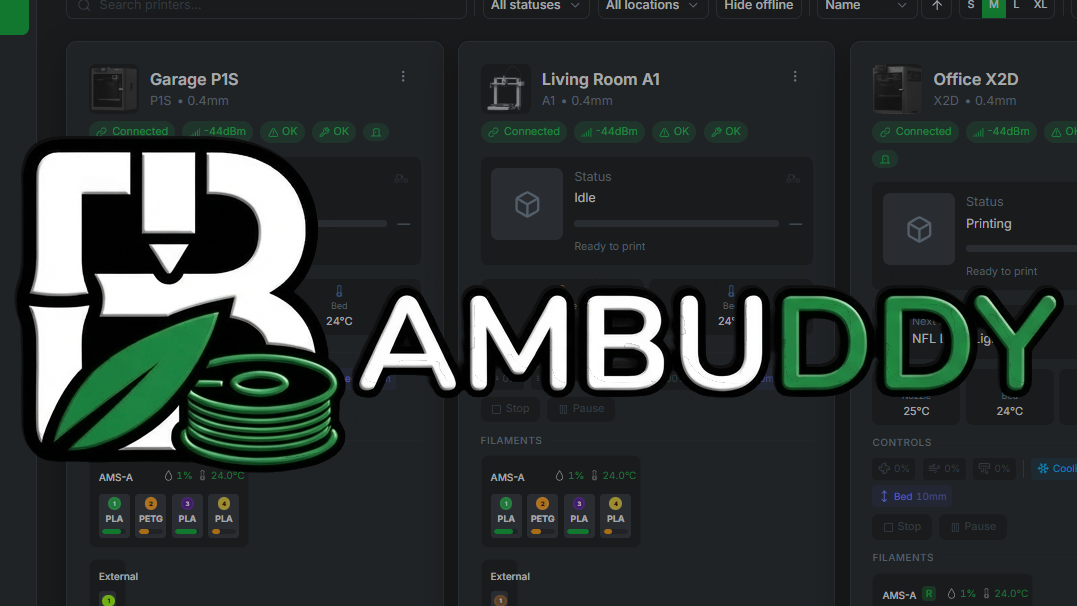
Multi-Printer Management: For users with more than one Bambu Lab printer, or those operating small print farms, Bambuddy’s ability to manage up to forty printers from a single interface is a game-changer. This central command center approach simplifies workflow, allowing for simultaneous monitoring, job queuing, and configuration adjustments across multiple machines. This scalability makes Bambuddy particularly attractive to prosumers, educators, and small businesses that rely on consistent, high-volume 3D printing. The dashboard provides real-time status updates, print progress, and error notifications for all connected printers, offering an unparalleled level of oversight.
-
Cross-Platform Compatibility: Developed with flexibility in mind, Bambuddy runs natively on Linux, macOS, and Windows. This broad compatibility ensures that a wide range of users, regardless of their preferred operating system, can leverage the software. Its lean resource requirements also make it an ideal candidate for deployment on single-board computers like the Raspberry Pi. Installing Bambuddy on a dedicated Raspberry Pi transforms it into a low-power, always-on server for printer management, further decentralizing control and reducing reliance on a primary workstation.
Technical Advantages and User Empowerment
The shift to a local, self-hosted solution brings several distinct technical and operational advantages:
- Enhanced Data Privacy and Security: By keeping all print files, telemetry data, and control commands within the local network, Bambuddy significantly reduces the risk of data breaches or unauthorized access from third parties. Users have complete control over who accesses their print data and under what conditions. This is particularly important for individuals and businesses dealing with sensitive prototypes, intellectual property, or confidential designs.
- Reduced Latency and Improved Reliability: Direct communication between Bambuddy and the printers over a local network results in faster response times and eliminates potential delays or outages caused by internet connectivity issues or remote server downtime. The printer’s operation becomes decoupled from the internet’s reliability, ensuring prints can continue even during network disruptions.
- Offline Operation: Once configured, Bambuddy allows users to operate their printers entirely offline, a crucial capability for environments with unreliable internet access or for those who simply prefer to keep their devices disconnected from the wider web for security reasons.
- Customization and Extensibility: As an open-source project, Bambuddy benefits from community contributions. Users and developers can inspect, modify, and extend its functionality, tailoring it to specific needs or integrating it with other home automation or production systems. This fosters innovation and ensures the software evolves in response to user demands, rather than solely corporate roadmaps.
- Long-Term Viability: Unlike cloud services, which can be altered, discontinued, or monetized in new ways by a manufacturer, a self-hosted solution like Bambuddy offers greater long-term stability. Users are not beholden to the manufacturer’s future business decisions regarding their cloud platform.
To facilitate adoption, the Bambuddy project website offers a live sandbox demo with simulated printers. This allows prospective users to explore the interface and functionality in a risk-free environment, making it easier for them to understand its capabilities before committing to an installation. This user-friendly approach aligns with the project’s goal of democratizing control over 3D printing hardware.
Official Responses: Bambu Lab’s Perspective and Public Stance
Bambu Lab, as a company, has consistently championed the convenience and innovation offered by its integrated cloud services. Their official stance emphasizes that cloud connectivity enables seamless remote monitoring, easy firmware updates, and a streamlined user experience, particularly for beginners or those seeking "plug-and-play" functionality. The ability to start a print from anywhere, receive notifications on a mobile device, and manage multiple printers through a centralized online portal are features that many users find highly appealing and contribute to the "Bambu experience."
However, the company’s responses to the specific concerns raised by the community and initiatives like Bambuddy have been varied and, at times, perceived as insufficient by critics.
Addressing Privacy and Security Concerns
Regarding data privacy, Bambu Lab has generally stated that user data is handled in accordance with their privacy policy and that print files are encrypted. They maintain that the data collected is primarily for improving product performance, diagnostics, and enhancing user features. However, these assurances have not fully allayed the concerns of users who prefer absolute control over their data flow and wish to avoid any third-party handling of their print jobs, regardless of stated policies. The core issue for many is the necessity of cloud routing for fundamentally local operations.
The AGPLv3 Violation Allegations
The allegations by the Software Freedom Conservancy (SFC) regarding AGPLv3 violations in Bambu Studio represented a significant challenge to Bambu Lab’s public image within the open-source community. The SFC publicly detailed their claims, alleging that Bambu Lab had incorporated AGPLv3-licensed code (derived from PrusaSlicer) into Bambu Studio without fulfilling the license’s requirement to provide corresponding source code for the modified network service.
Bambu Lab’s initial responses to these allegations were largely viewed as evasive or incomplete by the SFC and open-source advocates. While the company did make some efforts to release portions of its code and provide explanations, the SFC maintained that these actions did not constitute full compliance with AGPLv3. The dispute highlighted a fundamental clash between a commercial entity leveraging open-source foundations and the strict adherence demanded by strong copyleft licenses. The lack of a definitive, universally accepted resolution to these allegations has continued to fuel distrust among a segment of the user base and contributed to the motivation for community-driven alternatives.
Limited Accommodation for Local Control
While Bambu Lab has provided "LAN-only mode" and "Developer Mode" – features essential for Bambuddy to function – these were not necessarily introduced as an embrace of full local control. Rather, they appear to be concessions or technical necessities that, perhaps unintentionally, opened the door for projects like Bambuddy. The official documentation and software ecosystem still heavily steer users towards the cloud. There has been no clear official endorsement or active support for third-party local control solutions. The overall impression is that while Bambu Lab creates exceptional hardware, its software strategy remains firmly rooted in a proprietary, cloud-centric model, making community-driven projects like Bambuddy a necessary counter-movement rather than a complementary one.
Implications: Reshaping the Future of Connected Hardware
The emergence and growing popularity of Bambuddy carry significant implications, not just for Bambu Lab and its users, but for the broader 3D printing industry and the evolving relationship between consumers and their connected devices.
Implications for Bambu Lab
For Bambu Lab, Bambuddy represents both a challenge and a potential inflection point.
- Brand Reputation: While their hardware remains highly regarded, their software policies and handling of open-source licensing issues have already tarnished their reputation among privacy-conscious users and the open-source community. The success of Bambuddy could further highlight these perceived shortcomings, potentially impacting future sales and market share, especially among advanced users and those who value software freedom.
- Pressure for Policy Reevaluation: The existence of a robust, open-source alternative creates direct pressure on Bambu Lab to reconsider its software strategy. They might be compelled to offer more official local control options, provide clearer documentation for APIs, or even revise their approach to open-source licensing compliance to mitigate the fragmentation of their ecosystem.
- Ecosystem Fragmentation: If a significant portion of their user base adopts Bambuddy, it could lead to a fractured ecosystem. This might complicate official support efforts, firmware updates, and the collection of diagnostic data that Bambu Lab relies on for product improvement.
Implications for the 3D Printing Community
For the 3D printing community, Bambuddy is a resounding victory for user empowerment.
- Validation of Open Source: It validates the power and necessity of open-source development in providing alternatives when proprietary solutions fall short of user expectations or ethical standards. It demonstrates that the community can self-organize and build sophisticated tools to reclaim control over their purchased hardware.
- Setting a Precedent: Bambuddy sets a powerful precedent for demanding greater control from manufacturers of other smart devices. It sends a clear message that consumers are increasingly unwilling to accept hardware functionality being perpetually tied to external, proprietary cloud services.
- Enhanced Innovation: The open-source nature of Bambuddy means it can evolve rapidly, driven by community needs and contributions. This decentralized innovation can lead to features and integrations that a single corporate entity might not prioritize or even conceive.
Implications for the Broader Tech Industry
Beyond 3D printing, Bambuddy’s success resonates with larger debates in the tech industry:
- The IoT Control Debate: It highlights the ongoing struggle for user autonomy in the era of the Internet of Things. As more devices become "smart" and cloud-connected, the question of who truly controls the hardware – the owner or the manufacturer – becomes increasingly critical. Bambuddy serves as a blueprint for how communities can build local alternatives.
- Data Sovereignty: It underscores the growing importance of data sovereignty, allowing users to keep their personal and proprietary data within their own networks, rather than entrusting it to third-party servers.
- Right to Repair and Modify: The ability to run alternative software and gain full control over hardware aligns with the principles of the "right to repair" and the broader movement for consumers to own and modify the products they purchase, rather than merely license them.
In conclusion, Bambuddy is more than just a software utility; it is a pivotal moment in the ongoing struggle for user autonomy in the era of connected devices. By offering a robust, open-source, and self-hosted alternative, it not only empowers Bambu Lab printer owners but also sends a clear message to manufacturers across industries: innovation and convenience should not come at the expense of user control, privacy, and adherence to the principles of open-source collaboration. As the digital landscape continues to evolve, projects like Bambuddy will be crucial in shaping a future where technology serves its users, rather than controlling them.